
Blog
Learn how refill scheduling works in a lash business to boost retention. Discover tips for maintaining lash fullness and keeping clients happy.
Refill scheduling in a lash business is the structured practice of booking lash maintenance appointments every 2-3 weeks to sustain lash fullness and protect client retention. The industry term for this process is “retention-based scheduling,” and it governs everything from appointment timing to eligibility criteria. Clients typically maintain a 60-80% retention rate at the two-week mark, which is the ideal window to rebook before natural shedding pushes them below the refill threshold. Waiting past four weeks usually drops retention below 40%, which means a full set rather than a fill. Understanding how refill scheduling works in a lash business is the difference between a calendar that fills itself and one that leaks revenue every week.
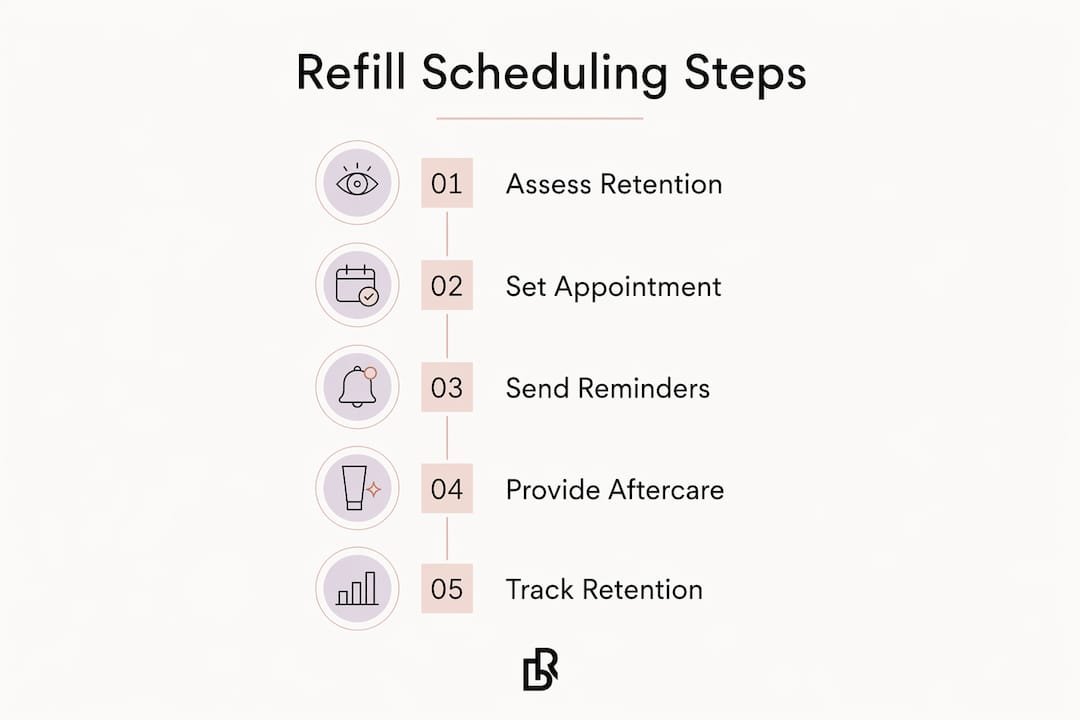
The professional lash refill protocol follows six defined steps, and skipping any one of them compromises both lash health and bond longevity. Here is the sequence every trained lash artist follows:
After the appointment, the artist delivers aftercare instructions verbally and in writing. Clients who follow aftercare correctly need fewer emergency fixes and stick closer to the standard refill window.
Pro Tip: Send aftercare instructions as a text or email immediately after the appointment. Clients who receive written reminders follow through at a much higher rate than those who rely on memory alone.
Eligibility for a refill appointment depends on two factors: how many natural lashes still carry an extension, and how much time has passed since the last appointment. Both matter equally.
The standard thresholds lash studios use are:
The natural lash growth cycle means shedding is not linear. Some clients lose extensions faster in summer due to sweat and oil production. Others hold extensions longer in cooler months. Tracking individual client patterns over time gives you the data to adjust their refill window accurately.
Pro Tip: Build eligibility rules directly into your booking page. When clients self-select their appointment type, a clear description of the 40% retention rule prevents mismatched bookings before they happen.
Client education is the most underused tool in refill scheduling. When clients understand why the 2-3 week window exists, they treat their refill appointment like a standing commitment rather than an optional add-on.
Manual refill scheduling breaks down fast. Studios with four or more artists find that manual outreach consumes unsustainable hours, and the fix is appointment software with automation built in. The right platform handles the logistics so you can focus on the chair.
“Automating the rebook-at-checkout process combined with integrated client reminders is the single most effective operational change a growing lash studio can make.” - Pulse RevOps Lash Studio Workflow
The features that matter most for refill scheduling are:
Bkrdy is built specifically for independent beauty studios and handles all of these functions in one place. The platform centralizes your calendar, client history, automated reminders, and deposit flows through Stripe, so your lash artist booking workflow runs without you chasing clients down manually.
Operational discipline separates studios that grow from those that plateau. The following practices apply whether you are a solo artist or managing a team of six.
Book the next appointment before the client leaves. This single habit has a bigger impact on retention than any marketing campaign. When the next fill is already on the calendar, clients do not drift. They show up.
Publish clear eligibility rules on your booking page. Ambiguity costs you money. When clients do not know whether they need a fill or a full set, they book the cheaper option and arrive expecting the shorter service. Clear communication of eligibility rules prevents operational chaos and protects your chair hours.
Use tiered pricing tied to retention thresholds. Charge a full-set equivalent when a client arrives with less than 40% retention, regardless of how much time has passed. Tiered pricing and retention-based charges maximize profitability and discourage clients from stretching their intervals too far.
Automate follow-ups instead of doing them manually. Automated workflows save 9-12 hours per week in busy studios. That time goes back into client appointments, not administrative tasks.
Track retention metrics per client. Retention-based scheduling avoids wasted appointment slots by matching each client’s actual lash state to the right appointment type and duration. A client who consistently holds 70% at three weeks gets a different slot length than one who drops to 45% at two weeks.
Balance chair hours across artists. If one artist handles all volume fills and another handles all classic sets, you create bottlenecks. Cross-training artists on multiple techniques keeps the schedule flexible and prevents one person from becoming a single point of failure.
Pro Tip: Frame refill appointments as maintenance, not an upsell. Language like “your scheduled maintenance fill” signals to clients that this is a routine care step, not an optional expense. That framing alone improves rebook rates.
Setting up a reliable online booking system from the start prevents the scheduling mismatches that drain revenue as your studio grows.
Effective refill scheduling in a lash business combines retention-based eligibility criteria, a consistent 2-3 week booking window, and automated appointment tools to protect chair hours and client loyalty.
| Point | Details |
|---|---|
| Refill eligibility threshold | Clients need at least 40% lash retention to qualify for a fill rather than a full set. |
| Optimal refill window | Book fills every 2-3 weeks; waiting past 4 weeks typically requires a full set rebuild. |
| Rebook at checkout | Scheduling the next appointment before the client leaves is the highest-impact retention habit. |
| Automate reminders and deposits | Timed reminders and deposit requirements reduce no-shows and protect recurring revenue. |
| Publish eligibility rules clearly | Transparent service criteria on your booking page prevent mismatched appointments and lost revenue. |
Most lash artists treat refill scheduling as a calendar problem. It is actually a revenue architecture problem. The studios that grow consistently are the ones that treat every fill appointment as the start of the next one, not the end of the current one.
The biggest mistake I see is relying on clients to self-manage their timing. They will not. Life gets busy, and without a system prompting them, they drift past the four-week mark and show up needing a full set they did not budget for. That creates friction, awkward pricing conversations, and sometimes a lost client. The fix is not better communication. It is automation that removes the decision from the client entirely.
Educating clients on the natural lash growth cycle genuinely changes their behavior. When a client understands that her extensions shed because her natural lashes shed, not because of poor application, she stops blaming the artist and starts respecting the refill window. That shift in understanding is worth more than any loyalty program.
Investing in a purpose-built booking platform like Bkrdy is not a luxury for studios at a certain size. It is the infrastructure that makes growth possible without burning out. The studios I have seen scale past three artists without chaos all have one thing in common: they stopped managing fills manually before they needed to.
, Luis
Lash refill scheduling only works consistently when the right tools are behind it. Bkrdy is built for independent lash artists who want a booking experience that reflects their brand and handles the operational side without extra effort.
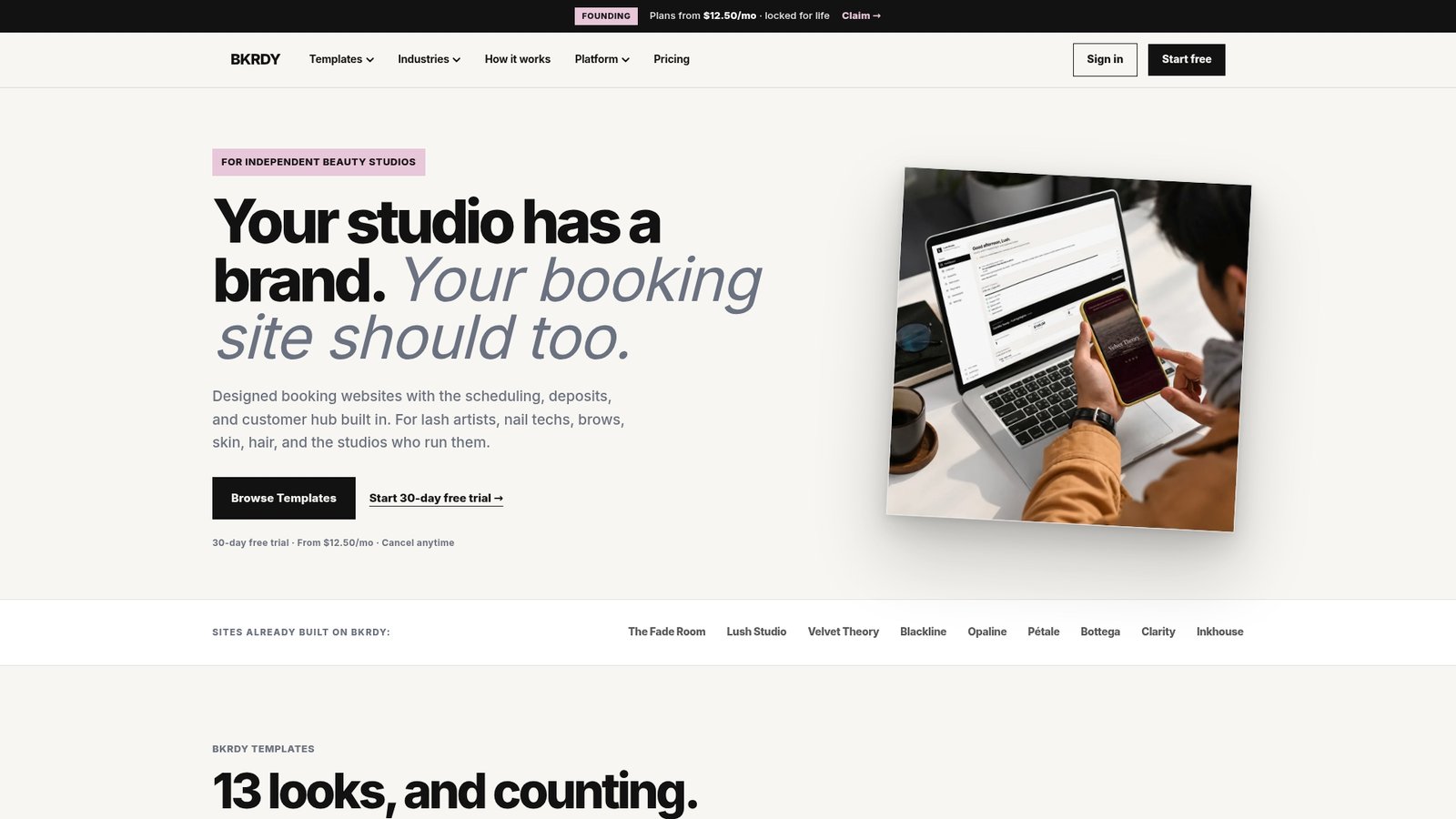
With Bkrdy, your lash booking website includes automated refill reminders timed to your preferred window, client history tracking, deposit processing through Stripe, and a waitlist that fills cancellations automatically. Your service menu can display eligibility rules clearly so clients arrive knowing exactly what to expect. Setup takes hours, not weeks, and the result is a calendar that manages itself. See how Bkrdy’s full feature set supports your refill scheduling workflow from day one.
Lash refills are scheduled every 2-3 weeks for most clients. Waiting beyond four weeks typically drops retention below the fill threshold and requires a full set instead.
Clients need at least 40% of their extensions still attached to qualify for a refill appointment. Below that threshold, the service time equals a full set and should be priced accordingly.
Automated reminders sent at the 14-day and 18-day marks prompt clients to rebook before they drift past the four-week cutoff. Combined with rebook-at-checkout habits, automation is the most reliable way to maintain a full calendar.
Clients who wait more than four weeks typically fall below 40% retention and need a full set rebuild. Studios should communicate this policy clearly on their booking page to avoid pricing disputes at the appointment.
Manual outreach for refill scheduling becomes unworkable as a studio grows. Automated workflows handle reminders, deposits, and rebooking, freeing artists to focus on clients rather than administrative follow-up.
BKRDY
Pick a template, take deposits, and let clients book on your own branded site. 30-day free trial.
Start your 30-day trial