
Blog
Explore effective deposit handling options for beauty studios in 2026. Learn strategies to secure bookings, reduce no-shows, and enhance cash flow.
Deposit handling options for beauty studios are defined as the payment structures studios use to secure bookings, protect revenue, and reduce no-shows before a client ever sits in the chair. The industry standard requires a non-refundable deposit collected at the time of booking, with cancellation windows of 24-48 hours before forfeiture kicks in. Studios that enforce clear deposit policies report fewer last-minute gaps in their calendars and more predictable cash flow. Getting this right is not complicated, but it does require choosing the right deposit type, collection method, and policy structure for your specific studio.
The most widely used deposit structure in beauty studios is the non-refundable partial deposit. Clients pay a set amount upfront, and that amount applies toward their final service balance. Applying deposits to the final cost improves client acceptance because it frames the deposit as a payment installment rather than an extra fee.
The main deposit types you will encounter are:
Pro Tip: Always state whether the deposit is refundable or non-refundable on your booking page before the client confirms. Surprises at checkout create disputes, not loyalty.

The collection method matters as much as the deposit amount. A policy that exists only on paper but has no enforcement mechanism is not a policy. It is a suggestion.
Booking platforms with integrated deposit collection handle payment at the moment of booking, which removes the awkward follow-up conversation entirely. Clients pay the deposit as part of the confirmation flow, and the studio receives the funds before the appointment is ever added to the calendar. This also consolidates financial reporting because every deposit is logged against the corresponding appointment automatically.
The most practical collection methods for beauty studios are:
Pro Tip: If you use a card-on-file policy, spell out the exact charge amount and trigger conditions in your booking confirmation email. Clients who feel informed rarely dispute charges.
A deposit policy is only as good as its clarity. Vague language creates loopholes, and loopholes cost you money. The goal is a policy that is firm enough to protect your time and flexible enough that good clients do not feel penalized.
Here is a practical framework for building your policy:
Clear communication on deposit policies, including cancellation notice requirements and late-arrival penalties, directly improves client adherence. Clients who understand the rules before they book are far less likely to push back when those rules are enforced.
Not every studio needs the same deposit structure. A high-volume nail bar operates differently from a boutique lash studio that books one client at a time. The right deposit approach depends on your service mix, client base, and how much revenue risk you carry per appointment.
| Studio type | Recommended deposit approach | Reason |
|---|---|---|
| High-volume, short services | Flat fee ($20-$30) or card on file | Low per-appointment risk; speed of booking matters |
| Boutique, long treatments | Percentage-based (30%-50%) or full prepay | High time and product investment per client |
| Specialist services (e.g., color correction, extensions) | Full prepayment or high percentage | Specialty products ordered in advance; long block times |
| New client, first visit | Non-refundable flat fee minimum | Establishes trust and filters uncommitted bookings |
| Loyal, repeat clients | Card on file or flexible transfer policy | Rewards reliability without adding friction |
Online booking platforms that allow customizable deposit settings per service category give you the flexibility to apply different rules to different treatments without managing it manually. A color correction and a brow wax do not carry the same risk, so they should not carry the same deposit requirement.
Studios that serve a high proportion of new clients benefit most from stricter upfront deposits. Studios with a loyal, repeat client base can afford more flexibility, such as deposit transfers or card-on-file policies, without increasing no-show risk.
The most effective deposit handling approach for a beauty studio combines a clear non-refundable policy, an integrated online collection method, and deposit terms tailored to each service type.
| Point | Details |
|---|---|
| Use non-refundable deposits as the default | Flat fees or percentage deposits protect revenue and filter uncommitted clients. |
| Collect deposits at the time of booking | Integrated platforms remove follow-up friction and log payments automatically. |
| Set a 24-48 hour cancellation window | This is the industry standard and gives clients fair notice while protecting your schedule. |
| Tailor deposit amounts to service risk | High-investment treatments warrant higher deposits or full prepayment. |
| Communicate policy at every touchpoint | Booking page, confirmation email, and appointment reminder should all state deposit terms clearly. |
The most common mistake I see studio owners make is treating the deposit policy as an afterthought. They set it once, bury it in a terms page nobody reads, and then feel awkward enforcing it when a client pushes back. That awkwardness is not a personality problem. It is a systems problem.
When your policy is embedded in the booking flow itself, the conversation never has to happen. The client agrees to the terms before they confirm. The deposit is collected automatically. If they cancel late, the forfeiture is handled by the platform, not by you personally. That separation matters more than most owners realize.
The other thing I would push back on is the idea that strict deposits drive clients away. In my experience, the clients who object most loudly to deposits are also the ones most likely to cancel last minute. A clear, firm policy does not repel good clients. It filters out the ones who were never going to show up anyway.
One nuance worth noting: deposit transfers are a genuinely useful middle ground. Allowing a client to move their deposit to a future appointment, when they give 48 hours notice, keeps the relationship intact without opening the door to abuse. It signals that you are reasonable, not rigid.
, Luis
Running deposit collection manually is one of those tasks that sounds simple until you are chasing a payment link at 9 PM the night before a full day of appointments. Bkrdy builds deposit handling directly into your booking website so the entire process runs without you touching it.
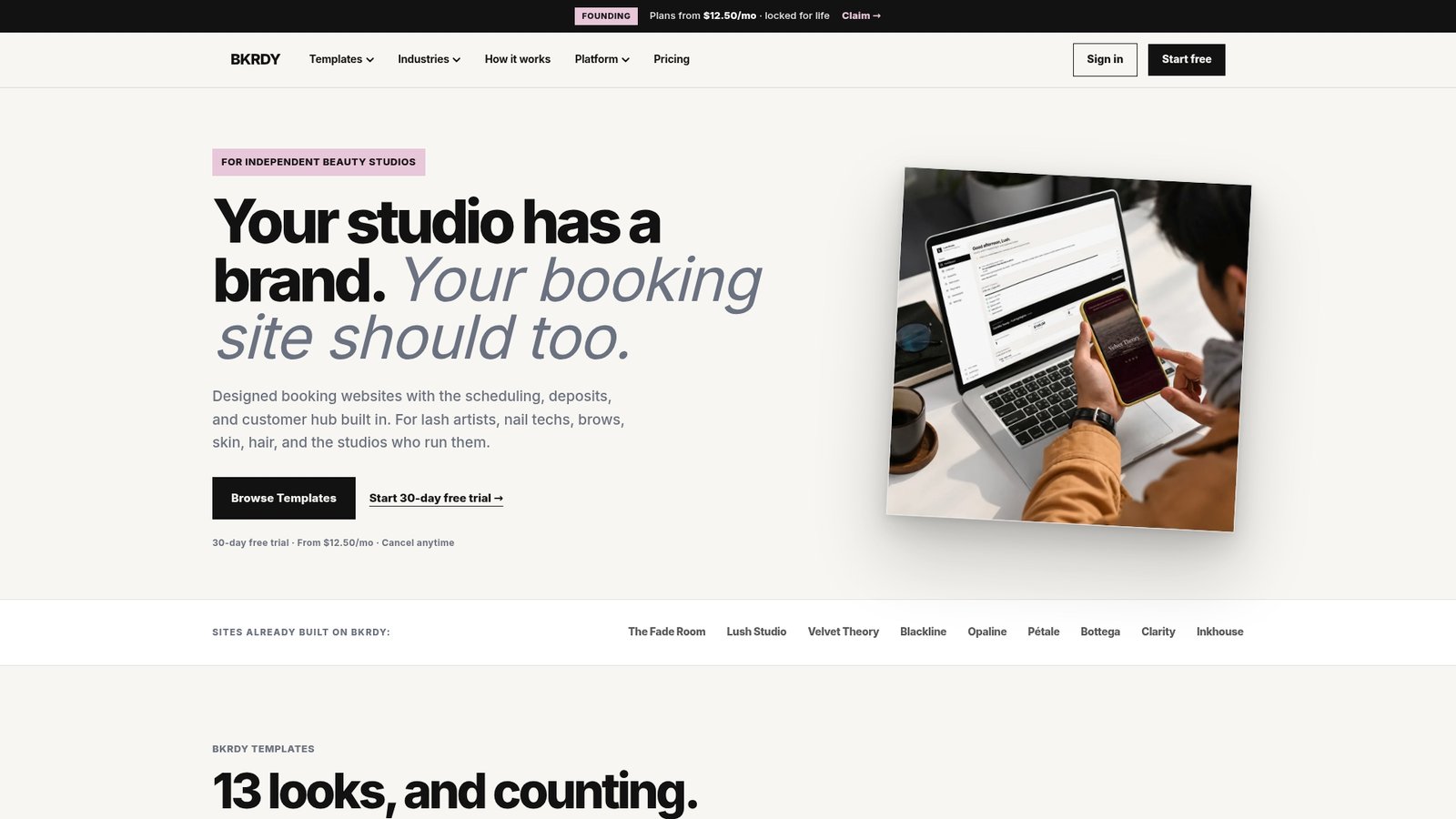
Bkrdy processes deposits through Stripe at the moment of booking, which means clients pay before the appointment is confirmed. You can set different deposit amounts per service, configure your cancellation window, and let the platform enforce the rules automatically. Studios using Bkrdy also get client self-serve rescheduling built in, so clients can move appointments within your policy terms without calling you. Whether you run a hair salon or a lash studio, Bkrdy gives you a booking site that looks professional and handles the financial details correctly from day one.
Most beauty studios charge a flat fee between $20 and $50 or a percentage of 25%-50% of the total service price. The right amount depends on service length and the cost of materials involved.
Most beauty studio deposits are non-refundable if the client cancels within the 24-48 hour notice window. Some studios allow deposit transfers to a future appointment when sufficient notice is given.
Use an online booking platform with integrated payment processing. Clients pay the deposit as part of the booking confirmation, so no follow-up is needed and every payment is logged automatically.
Yes. Customizable deposit settings per service category let you apply higher deposits to long or specialist treatments and lower amounts to quick services, which reflects the actual risk each appointment carries.
A no-show forfeits the deposit in full under standard beauty studio deposit policies. Studios using a card-on-file policy can process the forfeiture automatically without any manual action required.
BKRDY
Pick a template, take deposits, and let clients book on your own branded site. 30-day free trial.
Start your 30-day trial